Core Decision Loop
Every round in Tile Stacker revolves around a simple but weighty choice. As tiles descend, you must decide whether to place a normal piece or accept a row that appears at the bottom of the playfield. This row takes up space and makes future placements harder. The decision is not automatic; it depends on how much room you have left and how well you can adapt. Some players prefer to avoid extra rows at all costs, while others accept them when the board is still open. This mechanic turns each session into a series of small strategic puzzles rather than a pure test of speed.
Controls and Feedback
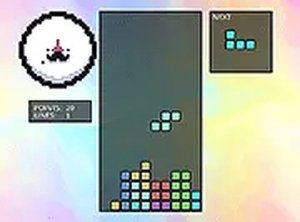
Movement is handled entirely through keyboard inputs. Left and right arrows shift the active tile horizontally, while the up arrow rotates it. A dedicated key drops the tile instantly to its lowest position. The interface shows a preview of the next piece, allowing you to plan ahead. As your score increases, the falling speed gradually accelerates, forcing quicker reactions and more precise placements. The clean visual style keeps the focus on the grid, with clear outlines and contrasting colors that make each tile easy to distinguish.
Risk Management
The cursed row mechanic introduces a risk-reward element uncommon in traditional tile-stacking games. When offered a row, you must weigh the immediate cost of lost space against the potential benefit of a better tile placement later. Accepting a row early might give you more flexibility in subsequent moves, but it also reduces your margin for error. Players who manage this balance well tend to survive longer and achieve higher scores. The system encourages thoughtful play rather than mindless repetition.
Progression and Replay Value
There are no unlockable levels or power-ups. Instead, the challenge comes from the increasing speed and the unpredictable nature of the row offers. Each run is unique because the sequence of tiles and the timing of row offers change every time. This randomness keeps the experience fresh and gives players a reason to return. The goal is simple: survive as long as possible and beat your previous high score. The lack of external rewards shifts focus to personal improvement and mastery of the core mechanics.
Visual and Technical Design
The game runs directly in a desktop browser without any downloads. Full-screen mode is available for an uninterrupted view. The graphics are minimal but functional, with a neutral background that reduces eye strain during long sessions. The grid is clearly marked, and the tiles have distinct shapes that are easy to recognize at a glance. Performance is smooth even on older computers, and the interface responds instantly to input. This straightforward design suits players who prefer substance over flashy effects.