Core Gameplay Loop
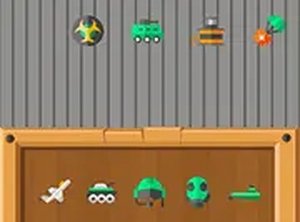
At the start of each round, a set of everyday objects appears on screen. Players have a few seconds to study the arrangement. After a brief pause, the objects are hidden, and one is removed. The challenge is to select the missing item from a list of options. Correct choices advance the player to the next round, where the number of objects may increase or the study time may shorten. This straightforward pattern keeps the focus on observation and recall without unnecessary distractions.
Progression and Difficulty
The game gradually becomes more demanding as players succeed. Early rounds present a small group of items with ample time to memorize. Later stages introduce larger sets and tighter time limits, requiring quicker thinking and better concentration. This adaptive difficulty ensures that beginners can build confidence while experienced players continue to find the game engaging. There are no abrupt jumps in complexity, making the learning curve smooth and natural.
Visual Design and Usability
The interface is clean and uncluttered, with high-contrast visuals that make items easy to distinguish. Buttons are large and responsive, whether using a touchscreen or a mouse. A full-screen option is available for those who prefer an immersive view. The design prioritizes clarity over decoration, so players can focus entirely on the memory task. Loading times are minimal, and the game runs smoothly on both mobile devices and desktop computers.
Accessibility and Convenience
Because the game runs entirely in a web browser, there is no need to download or install anything. It works on any device with an internet connection, making it easy to play during a commute, a break, or while waiting. The controls are intuitive, requiring only taps or clicks. This low barrier to entry means that anyone can start training their memory in seconds, without technical setup or account creation.
Family-Friendly Appeal
The content is suitable for all age groups. Younger players can improve their observation skills, while older adults may find it a gentle way to keep their minds active. The absence of violence, complex themes, or competitive pressure makes it a safe choice for family settings. Parents can feel comfortable allowing children to play without supervision, and the game can be a shared activity that encourages conversation about memory strategies.